Understanding Cable Release Backup on a Socketed AC Charger
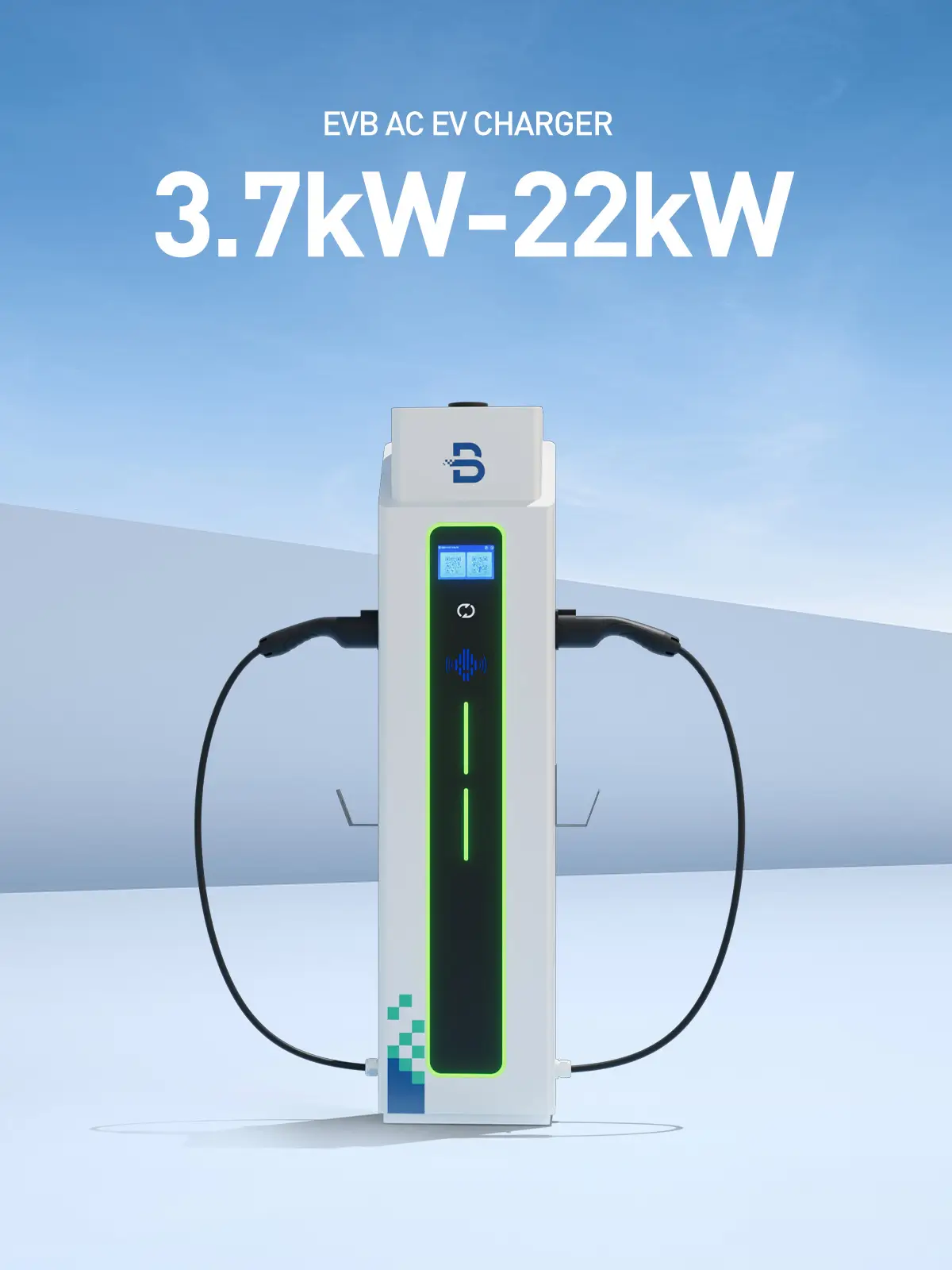
Cable-release backup and backup charging are different functions. A statement that backup power helps unlock a charging cable does not establish that the charger can keep supplying energy during a power failure. Purchasers should ask what the stated function does, which conditions it covers and how ordinary users are expected to obtain assistance.
Read the function against its stated task
The EVB AC product range lists wall-mounted and dual-socket equipment, as well as a floor-mounted family with payment facilities. AC means alternating current.
Where an offered socketed model includes cable-release backup, make cable release a specific procurement requirement and obtain the supported loss-of-supply conditions, release sequence and service actions. Keep that feature separate from any requirement to continue charging during a power failure.
Keep the supplier's wording attached to the order and request the relevant instructions for the actual configuration. That avoids a later disagreement in which one party expects cable release and another expects uninterrupted charging.
Separate the functions the site might want
List each desired outcome independently. For example, a site might want a session to end safely, a driver to recover a cable, the support system to retain a record, and charging service to return after the supply is restored.
These are four different requirements. Evidence for one does not prove the others. A device intended to support release should not be described as a source of vehicle-charging energy unless the supplier separately specifies that capability.
Also distinguish the charger socket from the vehicle's cable lock. A chargepoint function cannot be assumed to control every vehicle-side release process. The operator needs to know which instructions belong to the chargepoint supplier and which belong to the vehicle manufacturer.
Ask the supplier to define the operating conditions
Use a short set of questions about the ordered equipment:
· Which loss-of-supply or fault conditions does the function cover?
· Is release automatic, user-operated or handled through support?
· Which actions are permitted for an ordinary driver?
· What happens if the stated release process does not work?
· Does the function need inspection or service after use?
· Which other functions, if any, remain available?
Request applicable documentation rather than a general reassurance that the unit has “backup”. Leave any unanswered item open. Do not fill the gap by assuming a battery size, release time or number of operations.
Verify the expected result through an authorised demonstration
If the function matters to site operation, ask the supplier to propose a controlled demonstration and an acceptance record. The responsible people should determine the conditions and permitted test procedure.
A purchasing team should not simulate a supply failure by pulling an unidentified connection or asking a driver to operate electrical equipment. The demonstration must respect the installation and manufacturer's instructions.
The record should identify the tested unit, configuration, starting condition, observed cable-release outcome and any required restoration step. Do not extend that result to vehicle charging continuity or to untested fault conditions.
Decide which requirement the order must satisfy
For an unattended car park, make cable recovery a specific acceptance requirement. Keep separate entries for retaining remote access, preserving records and continuing vehicle charging; mark each as documented, demonstrated or unresolved for the ordered configuration.
If continuous charging is essential, the design must address it separately. This lets the purchaser accept a cable-release feature for its stated job while deciding whether any remaining gaps matter to the site.